EBOLA MEASURE: President Museveni warns against handling dead bodies
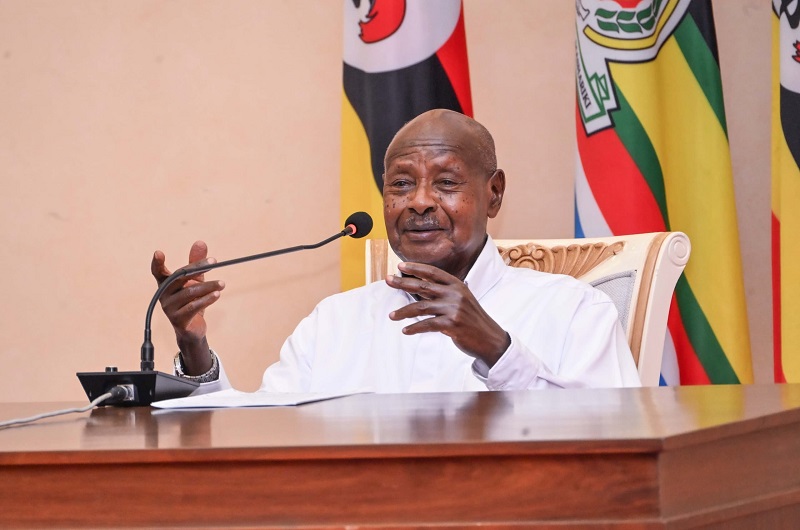
President Museveni while addressing the nation on the Ebola situation in the country on Wednesday. COURTESY PHOTO
KAMPALA – President Yoweri Kaguta Museveni has strongly warned Ugandans against touching or washing dead bodies, describing the practice as highly dangerous and a major driver of Ebola virus transmission.
Speaking during a keynote address on the Ebola situation at State House on June 10, 2026, President Museveni urged citizens to set aside customary burial practices for the time being to help contain the outbreak.
“Those customs were there when there was no danger like washing dead bodies. But now that there is danger, it has been announced: if somebody is sick, call the doctors, because they can tell you what type of sickness it is,” Museveni said.
He added: “Don’t just do it yourself. I hear that among the 19 Ebola cases in Uganda, 14 are from DR Congo and they are from one family. So, therefore, you now know how Ebola spreads.”
The President explained that Ebola spreads mainly through contact with an infected person’s saliva, blood, sweat, vomit, and semen. He stressed that the virus can remain in a man’s semen for up to nine months, according to health experts.
“So, this shaking of hands, please avoid it. There is a problem; just wave at people. And avoid eating wild meat,” Museveni advised.
He acknowledged that there is currently no vaccine or specific cure for Ebola, explaining that the virus often kills by triggering the body’s own overreaction. “The virus enters the body and provokes it to overreact. Much of the death is caused by the high temperature generated by the body, vomiting — losing water and bleeding eventually,” he said.
However, the President assured Ugandans that Ebola is survivable. During the current outbreak, five out of 19 patients have already recovered. He cited the case of a Congolese woman (sister-in-law of the first deceased patient) who survived after doctors successfully managed her body temperature.
Health officials brief the Nation
Dr. Chris Baryomunsi, the Minister of Health, noted that this is Uganda’s ninth Ebola outbreak since the first one in 2000. Some outbreaks, such as those in Northern Uganda and Bundibugyo, were large, while others were smaller.
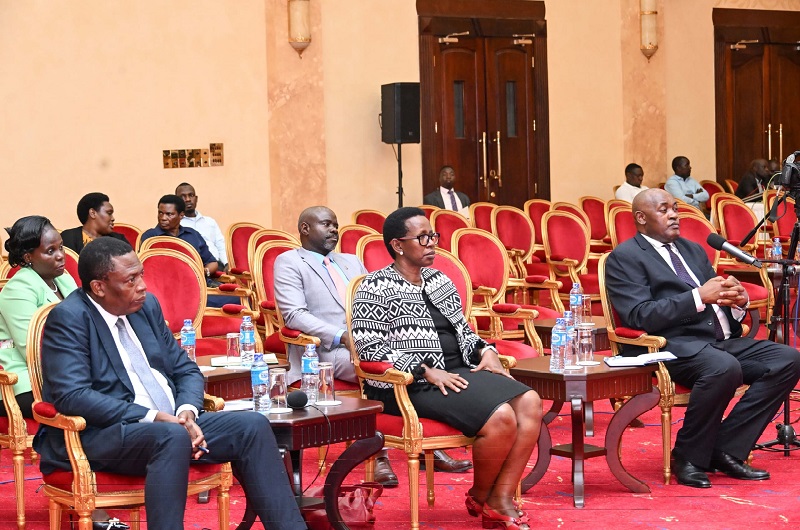
He highlighted that certain animals, particularly bats, monkeys, chimpanzees, and pigs, can harbour the virus. Once a person is infected, symptoms can appear between 2 and 21 days later.
Dr. Diana Atwine, the Permanent Secretary in the Ministry of Health, explained that the virus persists for a long time in blood, stool, and vomit. She warned that even recovering patients can still shed the virus.
“The alimentary canal appears to be a fertile ground for the virus to multiply, as there is no strong local defence there,” Dr. Atwine said.
“Even when someone has symptoms like fever, do not share cups or drink from the same bottle. In villages during mango and fruit seasons, avoid eating any fruit that has been bitten or damaged, because you don’t know which animal may have touched it.”
She also advised against using a shared cup for Holy Communion in churches, noting it poses a high risk not only for Ebola but also for other infections like Hepatitis B.
The officials confirmed that of the 19 recorded cases in Uganda, 14 originated from the Democratic Republic of Congo and belong to the same family. As of the presidential address on June 10, no new cases had been reported in the country for five days.