THE GOVERNANCE DIVIDEND WE KEEP LEAVING ON THE TABLE
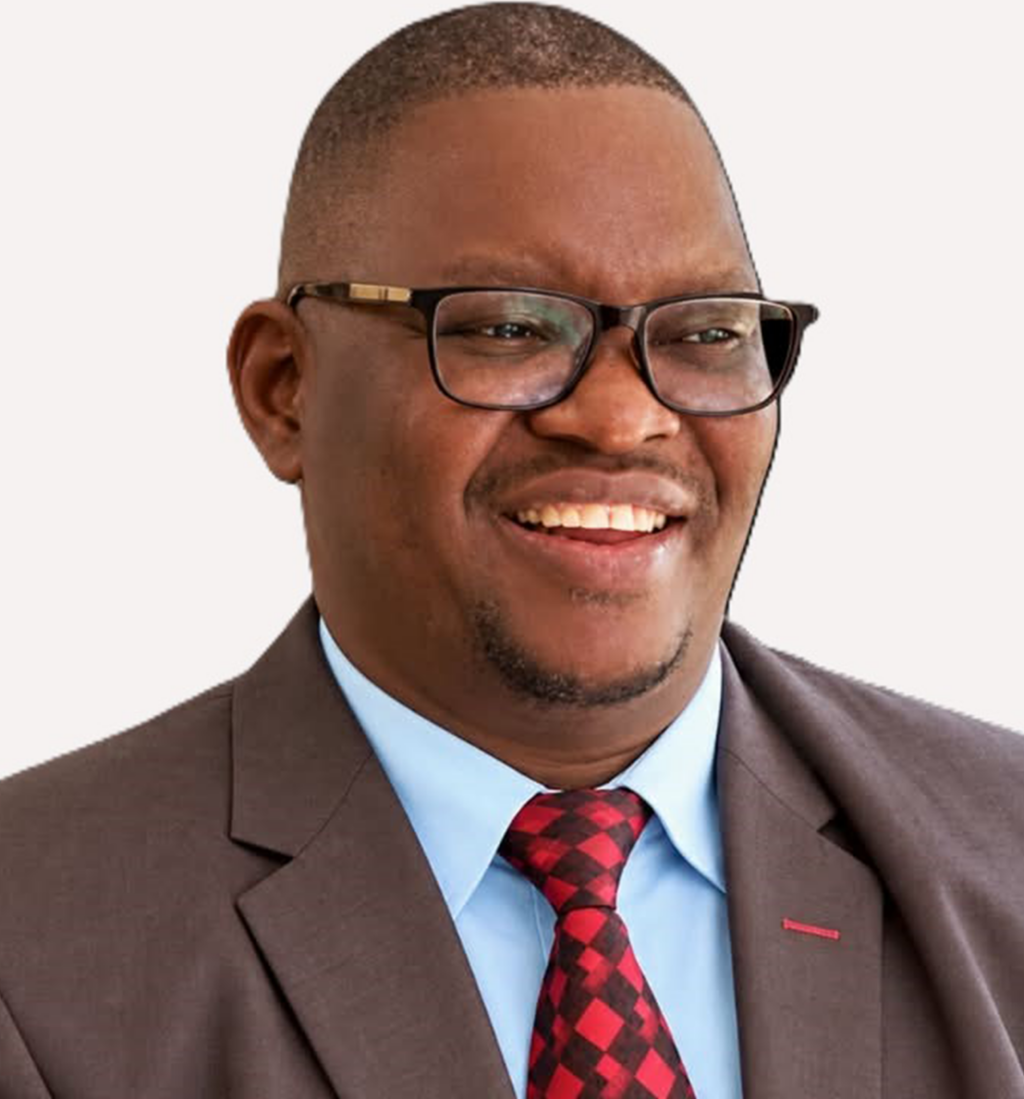
Moses Akuma Odims Executive Director /Secretary West Nile Development Association (WENDA) Arua, West Nile Sub-Region Uganda
Every election cycle in Uganda renews an old promise: that local governments will bring services closer to the people, make development more responsive, and hold leaders accountable where it matters most. Yet year after year, the gap between that promise and lived reality remains stubbornly wide. The problem is rarely a shortage of policies. It is a shortage of the institutional muscle, leadership depth, evidence culture and adaptive capacity required to turn policies into results.
Nowhere is this more evident — or more consequential — than in West Nile. Here, local governments must simultaneously manage rapid urban growth around Arua, navigate complex refugee-host relationships, respond to climate shocks, administer cross-border economic flows, and deliver the Parish Development Model with limited own-source revenue. These are not ordinary administrative challenges. They are the defining tests of whether decentralization can still deliver in the 21st century. This article argues that the answer lies in deliberately cultivating innovative local governments — and that the Muni University Institute of Leadership and Governance (MUILG) has been designed as a permanent regional instrument for doing exactly that.
What Innovative Local Governance Actually Looks Like
Innovation in local governance is often reduced to the latest digital tool or a rebranded training workshop. That is too thin. Real innovation is a system of practices that allows a local government to see problems clearly, act intelligently, learn quickly and adjust without waiting for the next five-year plan.
It has several interlocking features.
First, adaptive and ethical leadership. Technical competence alone is no longer enough. Leaders must be able to hold competing interests, model integrity under pressure, and build inclusive coalitions. This requires intentional pipelines — especially for women, youth, persons with disabilities and leaders emerging from refugee-hosting communities — not accidental ones.
Second, evidence that actually reaches the decision table. Most local governments are data-rich and insight-poor. Information sits in parallel systems; research is written for journals rather than budget conferences; and borderland or climate-related questions remain chronically under-studied. Innovative local governments treat rapid diagnostics, interoperable dashboards and predictive signals as management tools, not academic luxuries.
Third, participation that produces consequence. Citizen voice that ends in a report is theatre. Innovative practice links scorecards, barazas, digital feedback channels and service-improvement compacts to clear follow-up mechanisms so that commitments are tracked and visible.
Fourth, digital enablement designed for equity. High mobile penetration is an opportunity only if tools work on low bandwidth, in local languages where needed, and without excluding those with limited digital literacy. Offline-capable learning platforms, simple WhatsApp civic tools, and mobile-first dashboards are more valuable than sophisticated systems that few can use.
Fifth, continuous learning loops. One-off training events create temporary enthusiasm and permanent disappointment. Innovation embeds 30- and 90-day coaching, peer clinics, tracer studies and communities of practice so that skills survive contact with the real organisation.
Why MUILG Exists — and Why Its Design Matters
MUILG was established by the Muni University Council in November 2025, in partnership with the West Nile Development Association (WENDA) and VNG International, for a simple reason: West Nile needed a permanent, practice-oriented institution capable of working at the intersection of leadership development, applied research, community systems and institutional innovation.
Its theory of change is deliberately integrated. If the Institute builds its own capability and financing discipline, delivers competency-based programmes with rigorous follow-through, generates and mobilises usable evidence, and strengthens both community voice and local government systems, then leaders and institutions will begin to operate differently — more ethically, more inclusively, more evidence-informed, and more accountably.
This is not a conventional training centre. Nor is it a traditional research institute. It is designed as a problem-solving platform that can diagnose a governance bottleneck, design the response, build the capability to implement it, convene the actors who must own it, and measure whether anything actually changed.
Five Innovative Contributions MUILG Is Positioned to Make
1. From training events to performance systems
MUILG’s Local Government Performance Clinics do not end when the workshop ends. They begin with joint diagnosis, move into tailored support, and continue with structured 30- and 90-day follow-up. The West Nile Executive Leadership Programme and Digital Governance Certificate are being built as blended, competency-based pathways with coaching and peer accountability. The ambition is not more certificates; it is measurable shifts in how leaders and teams perform.
2. A living evidence ecosystem for West Nile
Through its Research Agenda and the emerging West Nile Governance Data Platform, MUILG is working to replace fragmented data with interoperable district dashboards and, progressively, predictive analytics that flag revenue risks, service gaps or climate vulnerabilities before they become crises. Policy briefs, rapid evidence notes and an annual Leadership and Governance Forum are designed to push insight into the rooms where budgets and plans are decided. A policy-uptake log will track whether the evidence is actually used — an accountability mechanism most research institutions still avoid.
3. Digital civic infrastructure that citizens can actually use
MUILG is piloting simple, mobile-accessible feedback and scorecard tools alongside traditional roundtables and barazas. The goal is not digital spectacle; it is faster, more inclusive feedback loops that work for a market trader in Arua as well as for a district planner. Combined with continuous Local Council support — anchored by the Institute’s Memorandum of Understanding with the Ministry of Local Government — this approach treats citizen–state interaction as a system to be strengthened, not an event to be staged.
4. An Innovation and Digital Transformation Lab as a public good
Rather than importing solutions designed elsewhere, MUILG is establishing a lightweight Innovation Lab to test digital learning tools, data products and civic technologies in the specific conditions of West Nile — low bandwidth, mixed literacy, multilingual settings, and the dual pressures of host and refugee populations. Successful experiments can then be scaled; failures can be retired quickly and cheaply. This is how public institutions learn at the speed the context demands.
5. Inclusion engineered into the operating system
Participation targets by sex, age, disability and community status are not side commitments; they are design parameters. Leadership pipelines, civic processes and research agendas are being built to surface and elevate voices that traditional structures systematically under-represent. Innovation that leaves women, youth, persons with disabilities or refugee-host communities behind is not innovation — it is exclusion with better branding.
The Stakes Could Not Be Clearer
Uganda’s decentralisation architecture is only as strong as the local governments that must carry it. When those governments lack adaptive leadership, usable evidence, functioning feedback loops and the capacity to learn, national programmes — however well designed — under-deliver. The Parish Development Model, climate adaptation efforts, refugee response integration and local economic development all ultimately rest on the quality of leadership and systems at district, municipality and sub-county level.
West Nile offers a concentrated version of the national challenge and, potentially, a concentrated version of the solution. If a practice-oriented institute rooted in the region can demonstrate that local governments can become more competent, more evidence-using, more inclusive and more adaptive, the demonstration effect will travel far beyond the sub-region.
What Must Happen Next
For MUILG and Muni University, the priority is disciplined execution of the Strategic Plan 2026/27–2029/30: protect the core interventions that build credibility early, fill the critical research and digital posts without delay, and treat the annual Results Report and policy-uptake log as public instruments of accountability.
For local governments and the Ministry of Local Government, the opportunity is to move from episodic training requests to long-term co-designed partnerships — annual packages that combine performance clinics, continuous learning, data support and structured follow-up.
For development partners and civil society, the invitation is to invest in institutional capacity rather than project fragments. Building a regional centre of excellence requires patient capital and a willingness to measure success by changes in how local governments function, not merely by the number of people trained.
The Governance Dividend
Innovative local governments are not a luxury for better times. They are the practical precondition for better services, stronger accountability and more inclusive development in the times we actually have. The Muni University Institute of Leadership and Governance was created to help West Nile — and, by extension, Uganda — capture a governance dividend that has been left on the table for too long.
That dividend will not appear automatically. It will be earned through leaders who learn and apply, institutions that use evidence, citizens whose voice carries consequence, and partners willing to build capacity that lasts. MUILG’s task is to make those conditions more likely, more measurable, and more widespread.
If it succeeds, West Nile will not only be better served. It will offer the country a working demonstration of what better led and better governed actually looks like.