How West Nile Can Secure Equal Opportunities in Central Government Appointments and Deployments
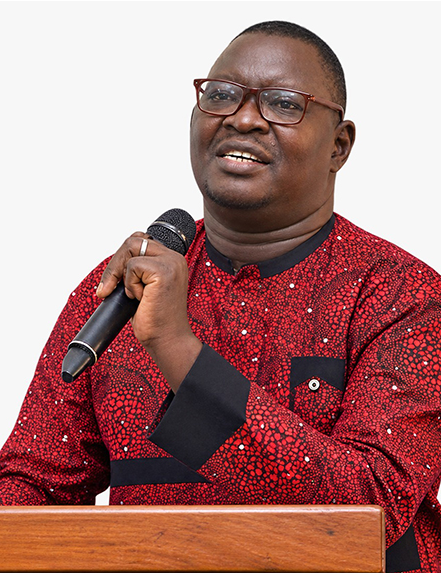
Moses Akuma Odims Executive Director /Secretary West Nile Development Association (WENDA) Arua, West Nile Sub-Region Uganda
OPINION: West Nile stands at a defining moment. With a population approaching four million, a strategic location that anchors Uganda’s trade and security relations with South Sudan and the Democratic Republic of Congo, and a consistent record of political support for national stability, our sub-region has every reason to expect fair and meaningful participation in the highest levels of central government. Yet too often we find ourselves responding to appointment lists after they have been released, expressing measured disappointment, and hoping for better outcomes next time. This reactive posture, however understandable, is no longer sufficient. The time has come for West Nile to move deliberately from reaction to strategy.
Equal opportunity in central government appointments and deployments is not a favour to be petitioned for after decisions are made. It is a question of national cohesion, effective governance, and the full utilisation of the country’s human capital. When capable leaders and professionals from any region are systematically underrepresented in Cabinet, Permanent Secretary positions, statutory boards, and commissions, the entire nation loses. West Nile’s case is therefore not a narrow sectional claim; it is a contribution to a stronger, more balanced Uganda.
The Limits of Reactive Advocacy
In recent years, West Nile has secured a number of State Minister positions. These appointments are welcome and represent progress. At the same time, the absence of full Cabinet Ministers and the continued scarcity of Permanent Secretaries and other senior technocratic roles from the region have prompted legitimate concern. Our Parliamentary Caucus, under the leadership of Hon. Hassan Kaps Fungaroo and colleagues, has articulated this concern with clarity and restraint. Similar questions have been raised on the floor of Parliament regarding regional balance in senior public service deployments.
Public statements after the fact serve an important democratic function. They signal that the region is watching and that representation matters. But they remain reactive. They depend on the goodwill of those who have already exercised their constitutional discretion. They rarely alter the immediate outcome and leave the region in a perpetual cycle of hope, disappointment, and renewed appeal. Sustainable change requires a different approach: continuous, evidence-based, and institutionally anchored engagement that shapes decisions before they are finalised.
What Proactive Negotiation Requires
Proactive negotiation is not confrontation. It is disciplined preparation, early engagement, and the presentation of credible options that serve both regional and national interests. It means maintaining an accurate inventory of qualified West Nile professionals across sectors and seniority levels. It means engaging the appointing authority, party structures, and relevant ministries well before major reshuffles or recruitment cycles. It means linking every claim for representation to concrete development outcomes—infrastructure, trade facilitation, refugee-host community integration, agricultural transformation, and climate resilience—rather than abstract demands for “slots.”
Above all, it requires that West Nile speak with one coherent voice. Fragmented appeals from individual districts or competing personal ambitions weaken the region’s standing. A unified position, grounded in competence and national interest, strengthens it.
Three Pillars of Collective Action
No single institution can carry this responsibility alone. Progress depends on the coordinated effort of three complementary actors.
WENDA: The Institutional Anchor
As the West Nile Development Association, WENDA exists precisely to enable the region to act collectively. Founded in 1993 and refined over more than three decades, WENDA brings together local governments, the private sector, and civil society under a shared commitment to peace, coordination, and development. Our strength lies in convening power and institutional continuity.
WENDA can and must serve as the permanent platform for tracking representation trends, maintaining a living database of regional human capital, and preparing evidence-based position papers ahead of appointment cycles. Unlike individual office-holders whose influence rises and falls with electoral fortunes, WENDA provides the continuity that turns episodic advocacy into sustained strategy. We sit at the junction of local government realities and national political processes; we are therefore uniquely placed to ground representation claims in the everyday development needs of our people.
The West Nile Parliamentary Caucus: Political Access and Voice
Our forty-two Members of Parliament constitute the region’s principal voice in the national legislature. They enjoy formal and informal access to the President, the structures of the ruling party, the Government Chief Whip, and senior ministers. This access is a strategic asset that must be exercised with discipline and foresight.
The Caucus has already shown readiness to articulate regional concerns with clarity. The next step is to institutionalise early engagement—presenting curated lists of competent candidates, highlighting gaps in current representation, and making the case for specific portfolios that align with West Nile’s comparative advantages. Equally important is internal cohesion. The Caucus must manage competition for positions transparently, prioritise collective regional interest, and present a coherent front. Regular consultation with WENDA and other stakeholders will strengthen both the quality of recommendations and the moral authority of the region’s claims.
State Ministers: Performance and Internal Advocacy
State Ministers from West Nile occupy a dual position. They are national office-holders with sectoral mandates, and they are also the region’s most visible representatives within the executive. Their most powerful contribution to the long-term case for expanded representation is competent delivery. Results in their assigned portfolios build the region’s reputation for producing capable leaders and create political space for arguing that West Nile talent can shoulder full Cabinet and senior technocratic responsibilities.
Beyond performance, State Ministers have access to Cabinet processes and informal networks that can be used discreetly and professionally to keep the question of broader inclusion on the agenda, to recommend capable professionals for boards and commissions, and to ensure that regional priorities are not overlooked in national planning. Regular coordination with WENDA and the Parliamentary Caucus is essential so that this internal advocacy remains aligned with a collective regional agenda.
A Practical Way Forward
Collective action requires structure. I propose that WENDA, working in close partnership with the West Nile Parliamentary Caucus, establish a Standing Technical Working Group on Governance and Representation. This group should maintain the region’s human capital inventory, monitor appointment trends, prepare concise advocacy briefs, and coordinate outreach to the appointing authority and party structures. Its membership should draw from selected Members of Parliament, local government leaders, State Ministers or their representatives, and independent professionals of integrity.
Advocacy itself must remain evidence-based and framed in the language of mutual benefit. How does the inclusion of capable West Nile leaders strengthen national policy effectiveness and social cohesion? What development outcomes become more achievable when the region has stronger presence at the centre? These are the questions that persuade. Purely distributive claims, however heartfelt, are more easily set aside.
We must also remain attentive to inclusion within West Nile itself. Women, youth, and minority communities—including the Nubian, Kebhu, and Lendu—must see themselves reflected in the region’s advocacy and in the candidates we put forward. Internal equity strengthens external legitimacy.
Conclusion
West Nile’s aspirations for equal opportunity in central government appointments and deployments are legitimate, constructive, and aligned with the constitutional values of equality and affirmative action. Realising those aspirations will not come from occasional expressions of dissatisfaction after lists are published. It will come from organised, continuous, and principled engagement led jointly by WENDA, the Parliamentary Caucus, and our State Ministers.
As Executive Director of WENDA, I commit the Association’s convening capacity and institutional memory to this effort. I invite our Members of Parliament and State Ministers to join us in building the standing mechanisms and the culture of early, evidence-based negotiation that the moment demands. When West Nile speaks with one prepared voice, the conversation with the centre changes. That is the shift we must now make—from reaction to strategy, from hope to organised action.
The region has the people, the location, and the political capital. What we require is the collective will to negotiate our future rather than merely respond to it. The work begins now.