How EU-WASH project is transforming lives in Northern Uganda
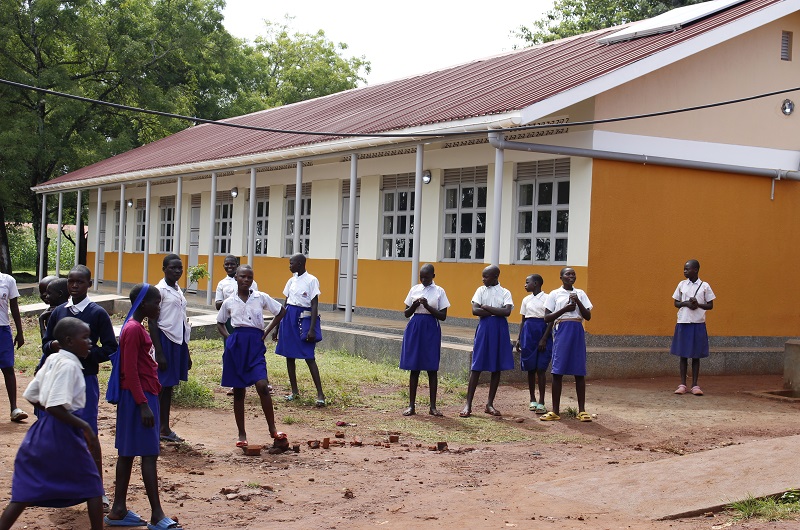
Pupils of Odike primary school posing for a photo moment in front of one of the the newly constructed classroom blocks at their school under EU-WASH project.
NORTHERN – Across Northern Uganda, thousands of children walk to school every day with a dream. A dream to learn. To stay in school. To become something more.
However, for many, that dream was being cut short not by lack of ambition, but by lack of dignity.
Crumbling classrooms. No desks. Pupils sitting on bare floors. Girls lining up for a single toilet. Lessons stopping every time it rained.
This is the reality in 199 schools across 23 districts in the Lango Acholi, and West Nile sub-regions.
But through a €27.2 million intervention funded by the European Union and implemented by the Water and Sanitation Development Facility-North on behalf of KfW, under the Ministry of Water and Environment, the EU-WASH Project is rewriting the story.
It is a project that is not just building classrooms and latrines. It is restoring dignity, keeping girls in school, and giving a second chance to child mothers.
We sampled five districts out of the 23 beneficiary districts to tell the story of transformation.
We traveled to Oyam and in the Lango and Omoro in Acholi sub-regions, and to Nebbi, Maracha and Yumbe in West Nile to witness firsthand how new classroom blocks, twin staff houses, and gender-sensitive VIP latrines with changing rooms and incinerators are changing lives.
This is the story of how water, sanitation and hygiene is transforming education. Hope is restored!
Tereza Aleke, a Primary Seven pupil at Odike Primary School in Oyam District, was among many school-age children on the verge of losing hope in education. Poor sanitary conditions and inadequate classroom facilities made effective learning almost impossible.
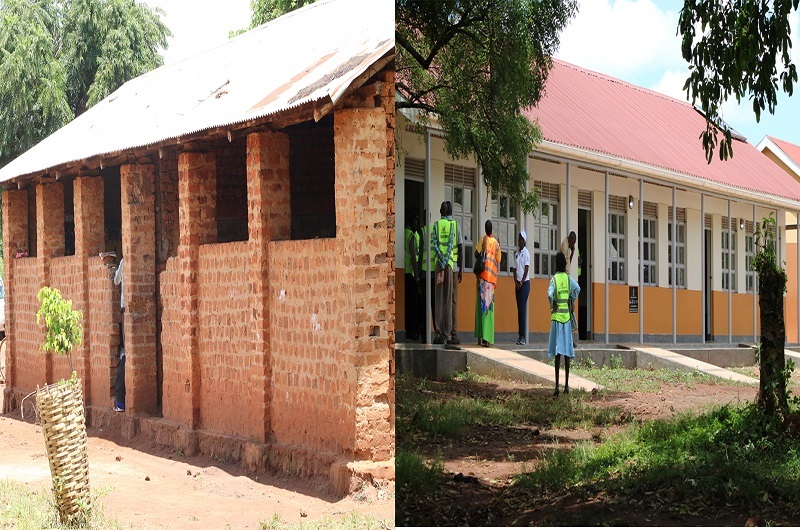
“Most of my friends were dropping out because they could not withstand the poor sanitary and classroom infrastructure,” Aleke said.
Her hopes of continuing her education have now been revived by new classroom blocks and VIP latrines constructed at the school.
Similarly, Jacob Ekwaro, another pupil at Odike, remains optimistic that the facelift will lead to improved academic performance.
“As boys, we faced serious sanitary challenges because our latrines were in a very poor state,” he said.
At least two new classroom blocks and three toilet blocks have been constructed at Odike Primary School. A twin staff house was also renovated.
Odike is one of 24 schools in Oyam District benefiting from the European Union-funded Water, Sanitation and Hygiene (EU-WASH) project.
During the technical handover of the completed facilities in Oyam District on October 7, 2026, Carlo Otim, the head teacher of Odike Primary School, expressed gratitude for the Ministry of Water and Environment’s intervention.
“The new facilities will greatly reduce overcrowding in classrooms and improve sanitation,” he said.
Bosco Odaga, the Parents Teachers Association (PTA) chairperson of Odike Primary School, thanked the government for bringing the project to what he described as the worst school in Oyam District in terms of classrooms and toilets.
He noted that many classrooms were overcrowded, with pupils forced to sit on the floor due to a shortage of desks.
Eng. Silvester Sinandugu, the Focal Engineer for the EU-WASH Infrastructure project and Deputy Branch Manager of WSDF-North, said the project aims to provide water, sanitation and infrastructure facilities in 199 schools across the three sub-regions. Eng. Sinandugu noted that work has already started in more than 100 schools.
He added that completed works under the Loro Cluster, covering Odike Primary School, Loro Secondary School and Loro Primary School, have been handed over at a total cost of Shs3.2 billion.
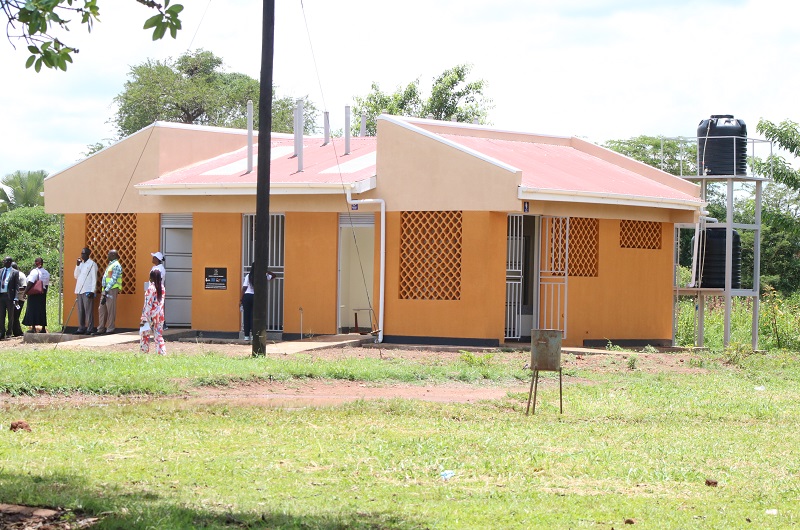
At Loro Senior Secondary School, a Senior Four student, Stephen Tim Ogwang described the new classrooms and VIP toilets as a major relief.
“In the past we lacked proper classrooms and often studied outside, even in bad weather. We thank the European Union and the Ministry of Water and Environment for coming to our aid,” he said.
Oyam District Education Officer David Adea said the work in the three beneficiary schools was well executed.
With a student population of more than 1,500 at Loro Secondary School, the new and renovated classrooms will ease congestion and enhance teaching and learning.
Oyam District Vice Chairperson, Ceasar Apali said the district is ready to monitor the project’s impact and urged school administrators to maintain the new facilities properly.
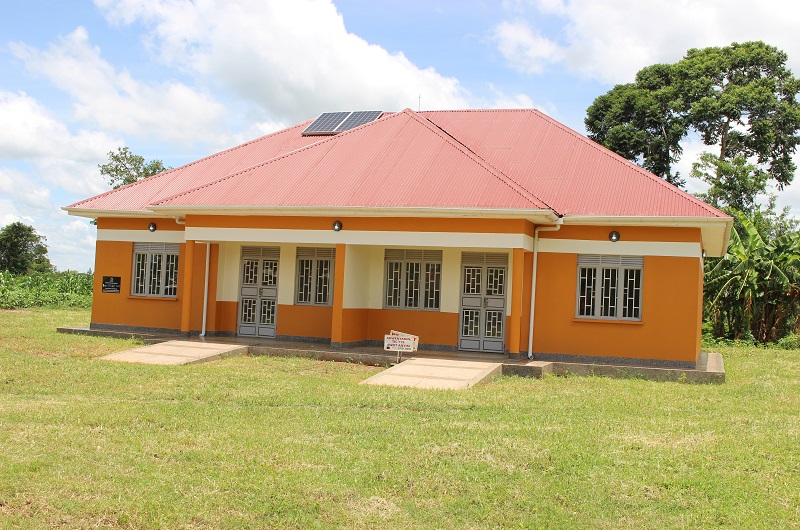
Progress in West Nile
Similar interventions are underway in Yumbe, Nebbi and Maracha districts. In Maracha District alone, seven schools are benefiting from the project; eight in Nebbi; and in Yumbe District, the project covers 17 schools (12 primary and five secondary) with a budget of about Shs12 billion.
Yumbe Secondary School was the first to be commissioned under Lot A of the Yumbe Cluster. Works at Kuru Primary School, Kuru Secondary School and Aringa Secondary School are nearing completion and will be commissioned soon.
On 22 September 2026, a three-classroom block and two VIP latrines were commissioned at Yumbe Secondary School. The classroom block includes water tanks, a solar-powered lighting system, 54 three-seater desks, three tables and six classroom chairs. The sanitation facilities consist of a four-stance VIP latrine for boys and a two-stance VIP toilet for girls, complete with a changing room and incinerator.
Sharon Desire, a Senior Six student, said the washrooms and incinerator will make girls more comfortable during their menstrual periods and help them maintain their dignity.
The head teacher of the school, Sarah Afisha, said the new classroom block and toilet facilities will have a significant positive impact on learners.
Tomson Obong, the Yumbe District Chief Administrative Officer, speaking on behalf of the district leadership, thanked the government and partners including the European Union, KfW, Enable and UNICEF for prioritizing Yumbe, a refugee-hosting district.
In Nebbi District, pupils and teachers of Alwala Primary School in Nyaravur Town Council are hopeful that upon completion of the two classroom blocks, VIP toilets and the twin staff house, the school will be able to attract more learners.
With an enrolment of 683 pupils, school authorities believe the number would have been higher if the school had better infrastructure. Currently, Alwala Primary School has inadequate toilet and classroom structures, with Primary Six pupils studying in a leaking grass-thatched house.
Jerry Rwothomio, a Primary Six pupil, said that whenever it starts raining, lessons stop because the blackboard and desks get wet.
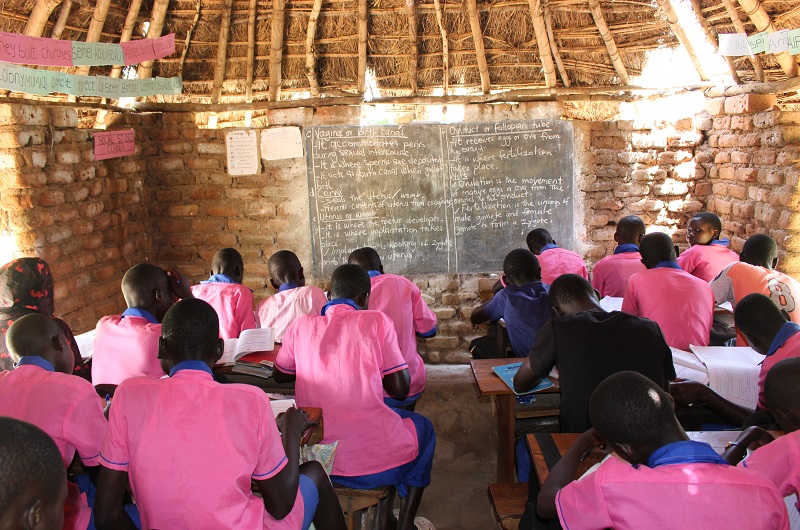
“I feel happy when I see they are constructing new classroom blocks because sometimes when it rains like this you will see the whole classroom gets wet everywhere. The desks and blackboards also get wet. If the teacher comes to teach, he will just find the blackboard is wet and so he just leaves. I’m now happy that the Ministry of Water has come to help us,” Rwothomio said.
He noted that many of his colleagues who dropped out due to poor sanitary and classroom conditions are likely to return to school once the EU-WASH infrastructure is completed.
Grace Letiru, the Senior Woman Teacher at Alwala Primary School, stressed that the completed facilities will improve the school’s appearance and help attract more learners.
According to Letiru, many girls leave school and get married because of the deplorable learning conditions, but efforts are underway to convince them to return.
“The latrines and classrooms have not been enough here but now I am sure from next year the number of pupils, especially girls, in Alwala Primary School will improve because of the new facilities under construction. Now that incinerators and a changing room will be there, our girls in this school will not suffer during their menstrual cycle. I’m sure girls are already mobilizing their colleagues to join our school.
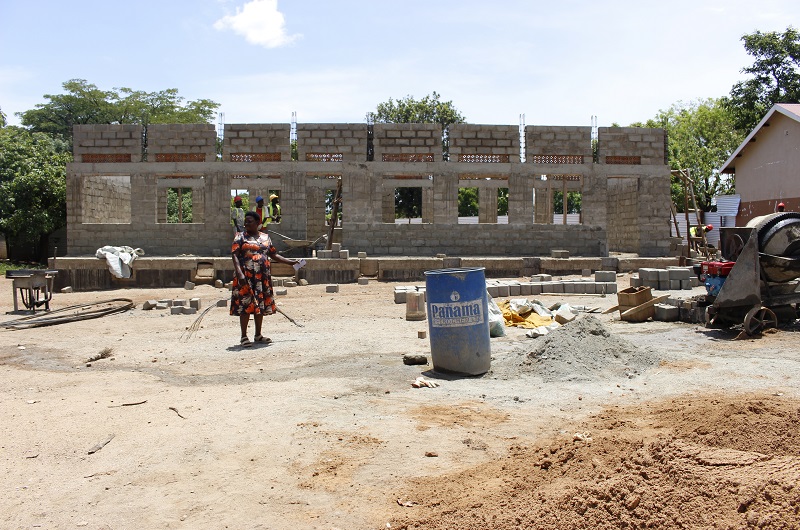
Currently, I have 21 child mothers studying with their children in this school. We are providing them little support but I am sure with this project, their number will even increase from 21 maybe up to 50 or more because there are very many child mothers at home in the community. Our target is to give them a second chance to study. I do move to some of those homes to convince parents of such girls to allow them to come back to school and they are showing positive interest,” Letiru said.
At Bura Primary School in Maracha Town Council, Maracha District, Winny Letasi, the school head girl, said girls currently rely on a five-stance toilet that is inadequate.
“Girls keep lining up to use the toilet and that has caused unnecessary delays during class hours. Now that they are constructing for us VIP toilets and classrooms, I’m sure the congestion we used to have in classes and while visiting toilets will be reduced,” Letasi said.
Similar projects are also being undertaken at Yivu Secondary School in Maracha. At least a two-classroom block, a twin staff house and VIP latrines are under construction at Yivu Secondary School, whose structures were built by parents as far back as 1984.
Genesis Kaya Ayibaku, the head teacher of Yivu Secondary School, said they were forced to turn school laboratories and a dormitory into classrooms due to the inadequate number of classrooms. They are also preparing a condemned block at the school for Senior One students to use.
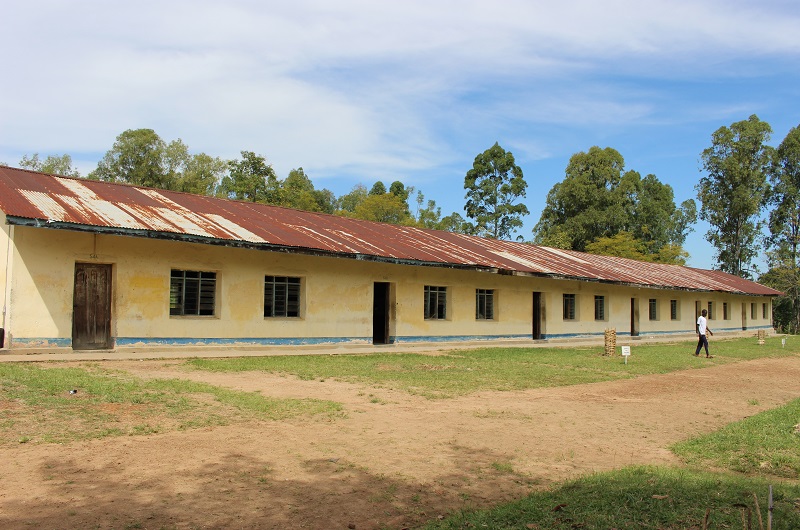
“We have an enrolment of 475 students; some are learning in laboratories. You see Senior Five and another section of Senior Six in the laboratory because the classrooms are not enough. Even this old building is becoming a classroom; we have just cleaned it yet it is a condemned block. We are now hopeful that upon completion, we shall shift learners from laboratories and the dormitory to the new classrooms built and this would have solved for us a big problem,” Ayibaku said.
Work Begins in Acholi Sub-region
In Omoro District, sites have been handed over to M/s Togo-Akom SMC Enterprises Ltd for construction of similar facilities in six primary schools out of 10 schools earmarked to benefit from the project.
The six schools are Aketket, Idobo, Lokwir, Lakwana, Minja and Lalogi primary schools.
At Aketket Primary School, a two-stance VIP latrine for teachers, an eight-stance latrine for girls, a six-stance latrine for boys, and two blocks of two classrooms each are to be constructed while at Idobo Primary School, a two-stance VIP latrine for teachers, a six-stance latrine for girls, a six-stance latrine for boys, and two blocks of two classrooms each will be constructed.
At Lokwir Primary School, a five-stance VIP latrine for girls, a five-stance latrine for boys, renovation of one latrine block, and three blocks of two classrooms each will be constructed.
But at Lakwana Primary School, two blocks of six-stance VIP latrines for boys and girls will be built.
At Minja Primary School, a six-stance VIP latrine for girls, a four-stance latrine for boys, a two-stance latrine for staff, and one two-classroom block will be constructed.
Similarly, at Lalogi Primary School, a two-stance VIP latrine for staff, a five-stance latrine for girls and a five-stance latrine for boys will be built.
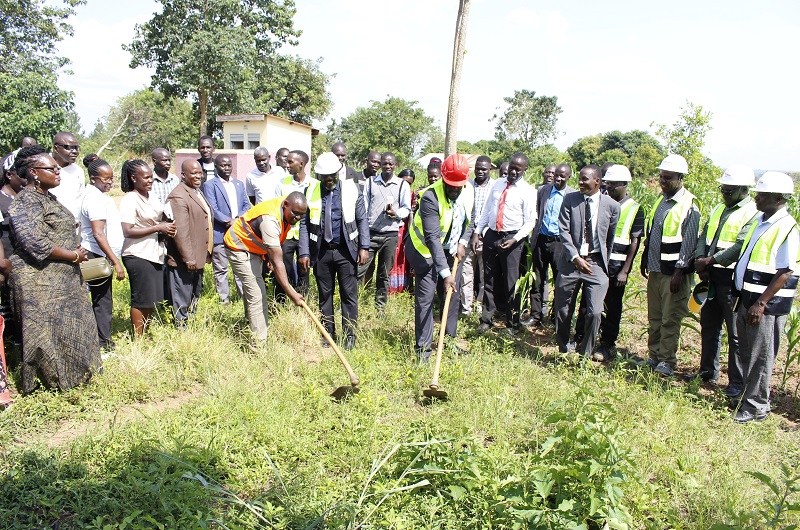
The projects in Omoro District will cost Shs2,748,283,631 (VAT inclusive) and are expected to be completed within nine months.
Martine Bosco Okoya, the head teacher of Minja Primary School, said the school’s 1,312 pupils currently lack adequate sanitary facilities. Teachers often had to walk to the staff quarters to use toilets. He is optimistic that the new facilities will significantly improve teaching and learning.
Omoro District Chairperson Andrew Okot Obibi said schools previously faced severe shortages of water, classrooms and toilets.
Through the Ministry of Water and Environment and partners such as the European Union and KfW, these critical gaps are now being addressed.