Capt. Aswa: The Soldier Who Announced Amin’s Government and Was Later Murdered for Opposing Extrajudicial Killings
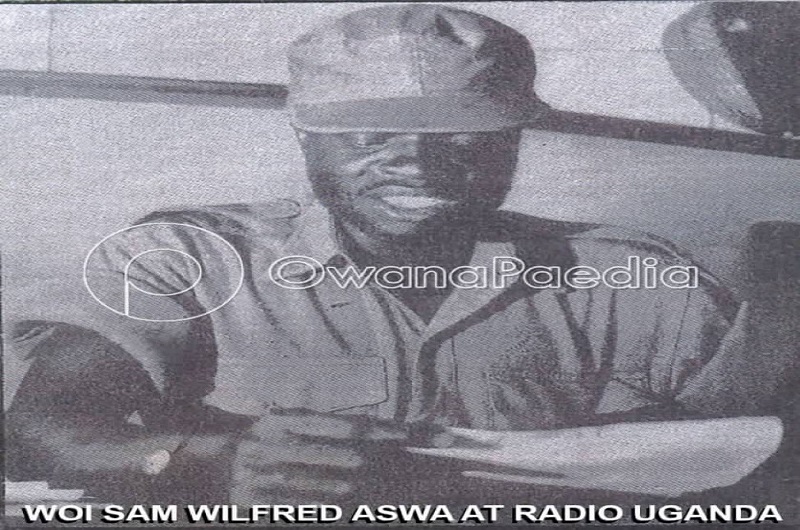
The Late Captain Wilfred Samuel Aswa
MARACHA – Little is known in the public domain about the late Captain Wilfred Samuel Aswa, but for those born before 1971, his name evokes a poignant story of courage and tragedy.
A native of Aia cell, Okokoro Town Council in Maracha District, Aswa was the soldier who boldly entered the studio of Radio Uganda (now UBC) to announce the military takeover of Dr. Milton Obote’s government on January 25, 1971.
This came after two days of intense fighting between forces loyal to Idi Amin Dada and those supporting President Obote. Obote was out of the country, attending a Commonwealth meeting in Singapore, just a year after he had assumed direct control of the armed forces and demoted Amin from overall military head to army chief.
Once the fighting subsided, Amin’s loyalists persuaded him to assume leadership. Several soldiers reportedly hesitated to make the announcement on national radio, but Warrant Officer II Wilfred Samuel Aswa (service number UR024, Uganda Rifles) stepped forward.
His broadcast triggered widespread jubilation in Kampala streets. For this act, Amin promptly promoted him to Captain.
How Trouble Began for Capt. Aswa
Retired Lance Corporal Musa Odua, 85, who joined the army in 1968, recalled that Aswa’s problems arose when he openly questioned Amin about the extrajudicial killings of civilians and soldiers, many of whom were Christians.
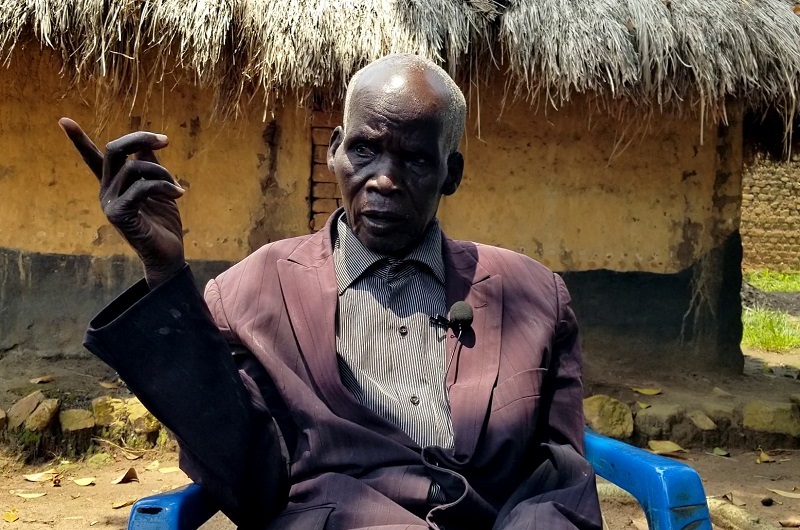
“The victims were mainly Christians, often executed by Lt. Col. Marile known as ‘Malaria,’ a Sudanese national. Aswa criticized these killings, saying he had not announced a government that would murder innocent people. This stance created enemies for him,” Odua said.
Aswa’s opposition led soldiers close to Amin, many of Congolese or Sudanese origin, to accuse him and others of plotting a coup.
Trailing and Threats
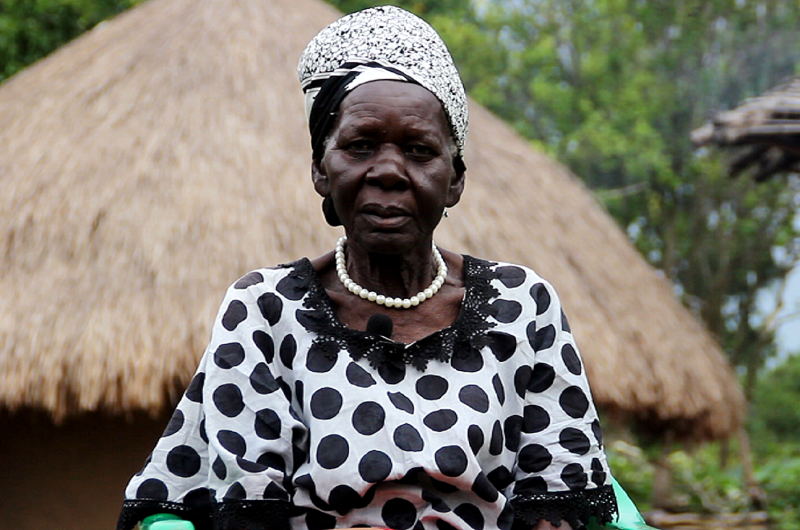
In 1973, Anna Saburu Njakaru, one of Aswa’s surviving wives, noticed armed men suspected to be from the State Research Bureau (SRB) following her husband. They arrived in civilian clothes, inquiring about his whereabouts.
“One evening at around 7:00 pm, four armed men in a numberless, unlit vehicle came to our Nakasero home. They confirmed I was Aswa’s wife but left when I said he wasn’t home,” Saburu recalled.
The harassment continued, with agents carving a cross on his car door wherever he parked. Aswa would abandon the vehicle and travel home with friends, such as Elly.
A sports enthusiast, Aswa once left his car at Nakivubo Stadium after watching football, only to find the mark again. He fled in Elly’s vehicle to his friend’s Nakasero home. Using a landline, he urgently summoned Saburu, warning her of danger. When he returned briefly after two days, he confided that his life was at risk before leaving for work, and never returned.
Rumours spread that he had fled to Nairobi, Kenya. Saburu, married to him for nine years, raised their four children; Gorgeous Asea Aswa, Edith Ondoru Aswa, Norbert Chaku Aswa, and Martin Acidri Aswa plus his son Godfrey Acema Aswa from another relationship.
Denied military assistance to return to Arua, she used Aswa’s savings for transport. Having completed a tailoring course he funded, she supported the family through sewing until vision problems forced her to stop.
Exile, Forced Repatriation, and Murder
Accounts from former soldiers vary on Aswa’s exile and death. Orusino Emazu, 83, Aswa’s maternal uncle from Lulumbe cell, said a friend hid Aswa in a wardrobe in Mengo before smuggling him, Capt. Onzima, and Capt. Musoke across the Malaba border to Kenya in a Mercedes-Benz at 2:00 am.
Emazu linked Aswa’s downfall to his love for football: spotted watching a match in Nairobi on December 23, 1975, he and colleagues were repatriated in coffins to Entebbe and taken to Makindye Barracks. Emazu, on duty, attempted to visit but was detained for a week. Upon release, he learned the three had been killed.
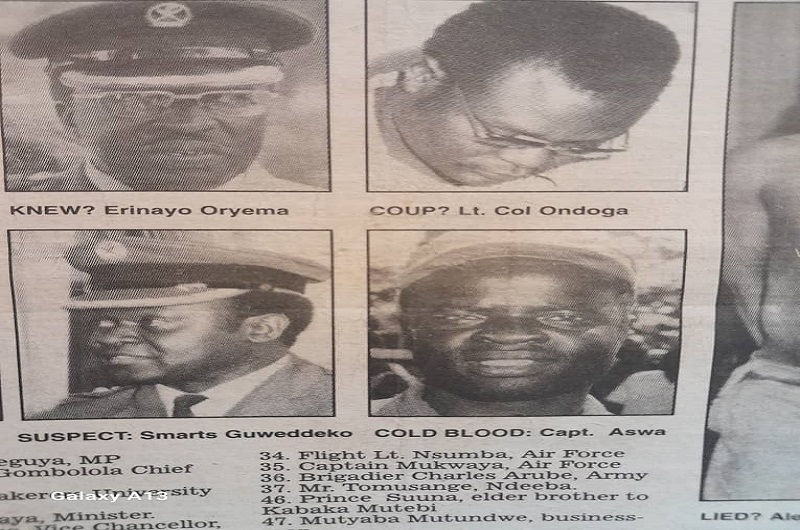
Mario Yia Yotua, another recruit, said Aswa fled after leading the Uganda Cranes to Nairobi and learning he was wanted for treason. SRB agents arrested him; radio announcements claimed he was “missing.” Within months, reports emerged that his head had been hammered to death at Makindye.
Isaac Zakko, recruited by Aswa in 1971, blamed religious persecution: Aswa challenged the targeting of Christians under Col. Marile. Agents marked his car with crosses. A Kakwa friend warned him, citing killings of others like Charles Arube and Col. Todoko. Aswa fled to Kenya but was captured and taken to Mutukula near Sango Bay sugarcane plantation.
There, Zakko witnessed the gruesome execution: hands tied, chest stretched, slaughtered with knives. As dragged from the vehicle, Aswa defiantly said, “Your time will come again.”
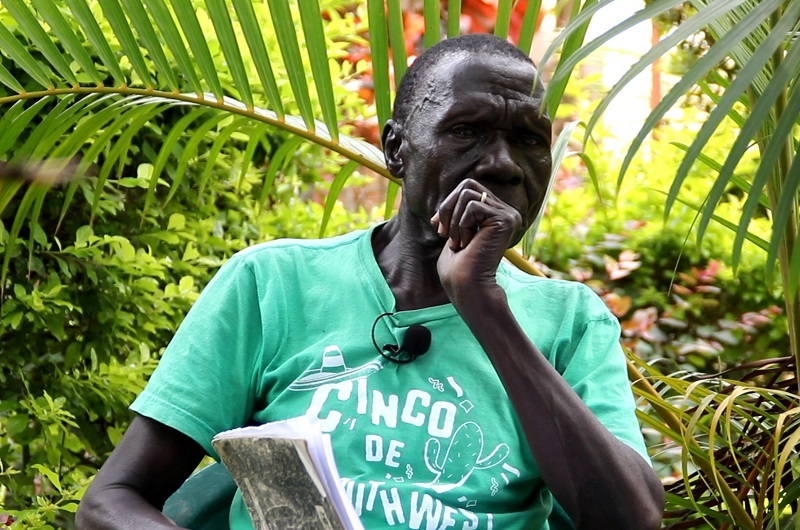
Lt. Col. (Rtd) Amb. Obitre Gama, former Internal Affairs Minister and Aswa’s brother-in-law, learned of the killing via newspapers, confirming Mutukula as the site.
Tributes to Aswa’s Character
Childhood friend Alex Gandu Tefolo, 84, recalled starting Primary One naked at Alivu Primary School. Aswa was friendly, football-loving, and sociable – even entering Gandu’s kitchen unannounced to eat.
Stephen Abima Ocitia, 77, described him as a learned, gallant soldier opposing Amin’s brutality. He urged President Museveni to support the family.
Grant Odiria, 79, highlighted Aswa’s football skills, sociability, and faith at Alivu Church of Uganda.
Younger brother Marcelo Adia, 73, remembered Aswa’s generosity. Recruited in 1963 at Ovujo after an officer spotted his height and energy, Aswa supported the family and recruited others.
Upon hearing of his death, their mother Jita Koko lay on the Arua-Koboko road in despair; a driver saved her, but she grieved until blindness. She died and was buried in Congo during the 1979 war.
Aswa’s daughter, Edith Ondoru Aswa tearfully appealed to President Yoweri Museveni to recognize her father’s heroism against Amin’s killings by providing them a house, a state funeral, and jobs for family members.

She said many victims’ families have been honoured, but not theirs.
Aswa’s Biography
Born in 1942 to Adu Oulu and Jita Koko in Aia village, Kijomoro sub-county (now Okokoro Town Council), Maracha District. Fourth of six children.
Aswa started P1 at Alivu Primary (1954), transferred to Ombiniri and Otravu PS (completed P6 in 1960). Nyangilia Junior Secondary (1961); commercial school in Kampala (1962, dropped out for fees). Herded cattle until army recruitment.
Joined army in 1963; trained, promoted to Corporal (clerk), Warrant Officer II (1968). Recruited in West Nile (1966). Attached to Mbarara Barracks by 1970.
On Christmas 1970, prayed at Alivu Church. Announced Obote’s overthrow January 25, 1971; ordered soldiers back to barracks; promoted to Captain.
Fled to Kenya 1973 amid threats; repatriated and killed at Mutukula/Sango Bay. His body remains missing to date.