How the Aringa used to prepare young people for adulthood and what today’s generation can learn
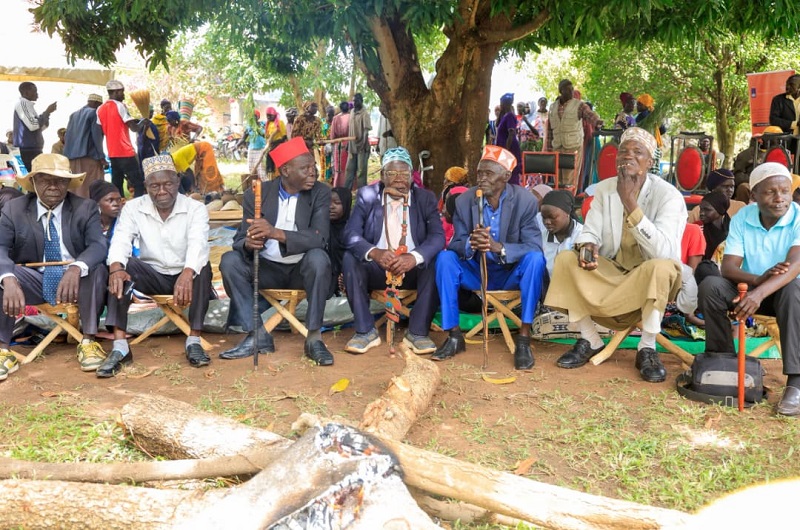
Aringa Kingdom officials seated near the fire place during the function in Yumbe district
YUMBE — During the Koi Koi Fireside Conversation organized by the Protect SRHR consortium of IRC, World Vision, Reach A Hand Africa and Humanity and Inclusion in Yumbe on 25th September 2026, elders and cultural leaders shared how traditional Aringa practices were once used to guide young people and prevent teenage pregnancies and child marriages.
Yumbe is one of the districts in Uganda with a high rate of teenage pregnancies. According to the district’s Health Management Information System (HMIS), the numbers peaked significantly during the COVID-19 pandemic, exceeding 7,000 cases recorded over a short multi-month lockdown period. By the 2023/2024 financial year, the figure was estimated at 5,740 cases.
For the elders, the persistence of teenage pregnancies and child marriages has raised questions about what has changed in the way young people are guided. They believe some of the cultural practices that once helped prepare children for adulthood have weakened over time.
As the conversation turned to the past, the elders began telling the story of how they used to do it.
Historically, Aringa traditional culture did not approve of early pregnancy. An Aringa girl was traditionally expected to marry at around the age of 25, after she had gone through a process of preparation for adulthood.
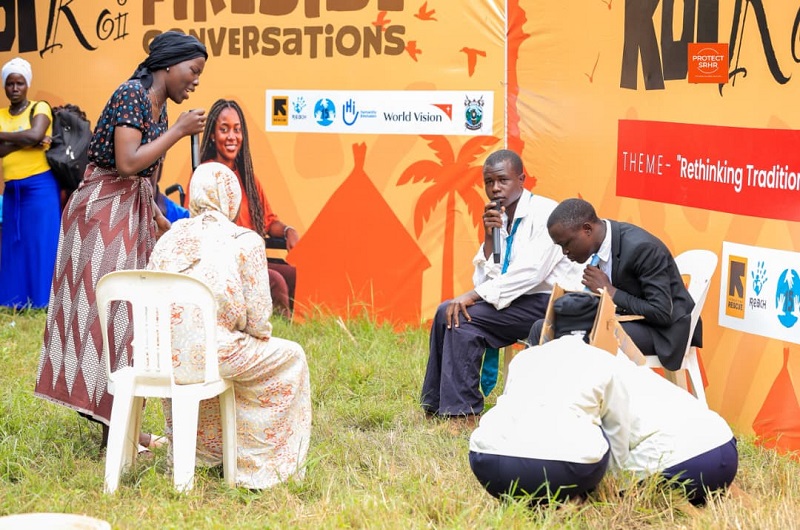
The Deputy Prime Minister of the Aringa Kingdom, Ali Abdli Adaku, said the problem facing society today, particularly teenagers, has made it important to revisit how young people were traditionally raised.
He says the cultural institution is sometimes blamed for marrying girls off at a very young age, yet this, he argues, does not reflect what Aringa culture traditionally taught.
“Aringa culture is very clear. Both girls and boys must undergo a process from childhood that prepares them to become a man or a woman. There is no shortcut,” he says.
He recalls that after a day of work, older members of the family would sit with the young people in the evenings. Uncles and grandfathers would talk to boys, while mothers and aunties would talk to girls. At times, the whole family would come together.
This was how they taught. They talked to the young people about discipline, respect, love, identity and responsibility. Girls were taught what was expected of them as they grew into women, while boys were prepared for the responsibilities expected of men.
Adaku says these conversations also helped young people understand the boundaries within which they were expected to live.
Looking back about 30 years, he says, such cultural engagement was much more common. Girls were treated as an important part of the family and community and were prepared until they were considered mature enough to take on adult responsibilities.
That preparation continued into relationships and marriage.
According to Nuru Ajaga Kambason, the Minister for Culture, Wildlife and Community Development in the Aringa Kingdom, marriage was traditionally not simply a matter of a man coming to take a girl from her family.
He explains how they used to do it: “Once a girl was considered mature and a prospective husband had been identified, the boy’s father would approach the girl’s father. The families would sit together and discuss the matter. The boy was also expected to see and understand that the girl was mature enough for marriage.
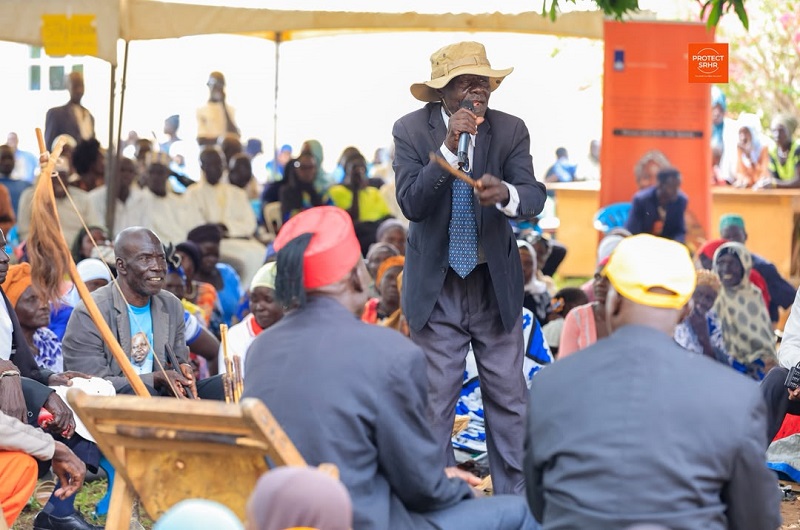
People would sit and advise. They would tell you not to make the mistake of going to a husband when you are not mature,” Kambason explains.
But the guidance started long before marriage; Kambason said young people were taught about relationships and the consequences of their actions. They were discouraged from leaving home to engage in sexual activity with friends because such actions could have consequences for themselves and their families.
He remembers a time when parents and relatives closely followed the movements and behavior of young people.
In those days, he explains, even leaving home for a day could attract concern. Young people were expected to remain within the guidance of their families rather than going away to engage in activities that could expose them to harm or bring shame to the family.
For Kambason, these rules were not simply restrictions. They were part of how the community guided young people towards responsible adulthood and ensured that a girl eventually entered marriage through a recognized family process.
He says this is what they are trying to bring back through the cultural conversations.
“We want to bring back the cultural knowledge that has been passed down through generations but has gradually weakened,” he says.
For Engule Juma Allahai, the Minister for Constitutional Affairs, the preparation of young people was also about ensuring that they were mature enough to handle the responsibilities of adulthood.
He says the traditional Aringa expectation was for both boys and girls to marry at around 25 years and above, although the Kingdom is not opposed to Uganda’s legal position recognizing 18 as the age of majority.
“We are not against that,” he says.
Instead, Allahai explains that the traditional approach was to prepare children to reach the level of maturity expected of an adult before taking on responsibilities such as marriage.
And this maturity was not determined by age alone.
He says parents traditionally watched how their children behaved and what they could do for themselves and their families.
Even someone who was 40 years old could fail to be recognized as mature if they could not perform the responsibilities expected of an adult.
For a young man, Allahai says, this could mean having a garden, growing crops, and having his own house.
If a man reached 25 but still had no garden or house, he could not necessarily be considered mature within the traditional system.
“Manhood is about fulfilling responsibilities,” Allahai says.
He recalls that a young man was expected to build a house, look after animals and protect his home when insecurity arose. These responsibilities were part of how the community prepared boys mentally and physically for adulthood.
Girls, too, were observed as they grew.
Allahai says maturity among girls was assessed through their behaviour and the responsibilities they took on at home. When a girl began preparing arts and crafts and her behaviour changed, she could begin to be recognized as a mature person.
In this way, the elders say, growing up was not something a child went through alone.
Parents watched. Mothers and aunties taught girls. Fathers, uncles and grandfathers guided boys. Elders sat with young people and talked to them. Families discussed relationships before marriage. The wider community played a role in preparing young people for adulthood.
That, they say, was how they used to do it.
The cultural leaders believe that some of these systems of guidance have weakened, leaving young people exposed to pressures that can contribute to teenage pregnancy, early marriage and school dropout.
The Koi Koi Fireside Conversations therefore offered them an opportunity to tell that story again, not simply as a celebration of the past, but as a reflection on what worked in guiding young people and what lessons can still be drawn from it today.
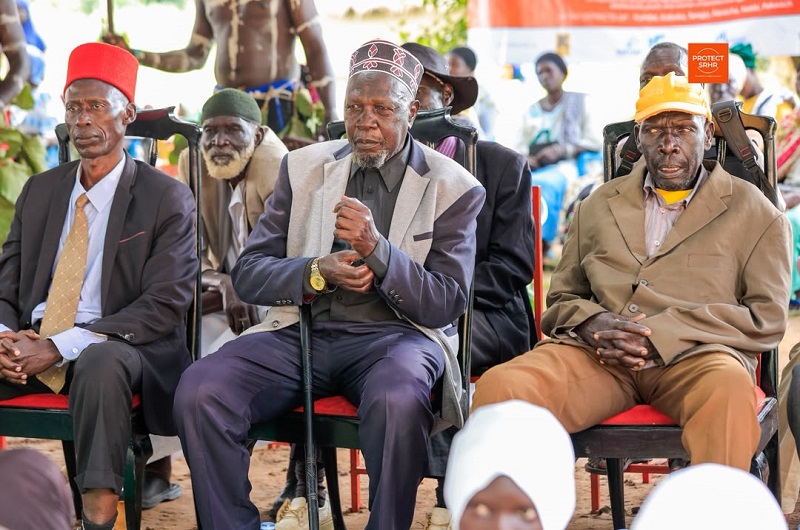
For the elders, bringing culture back into the conversation does not mean returning to the past exactly as it was. It means recovering the practice of talking to young people, preparing them for adulthood, and helping them understand responsibility before they are expected to take it on.
It is a story of how they used to do it, and a question for today’s generation about what can be carried forward.
About PROTECT SRHR
Protect Sexual and Reproductive Health and Rights (PROTECT SRHR) is a four-year project running from 2024 to 2028, funded by the Embassy of the Kingdom of the Netherlands in Uganda. The project is implemented by a consortium comprising the International Rescue Committee, Reach A Hand Africa, Humanity & Inclusion, and World Vision Uganda, as a strategic partner.
The project aims to improve sexual and reproductive health and social well-being among adolescents, young people, and women in Uganda’s West Nile region. It focuses on improving access to SRHR services, strengthening education systems, promoting economic empowerment, transforming negative social and gender norms, and strengthening inclusive governance.
PROTECT SRHR is implemented across six districts, 89 sub-counties, 167 health facilities, and 952 schools, reaching an estimated population of 2,281,205 people, including approximately 688,240 refugees. Its target groups include adolescents and young people aged 10–24, including young people with disabilities, teenage mothers, and those not in education, employment, or training, as well as women of reproductive age.
Through its interventions in health, education, social norms transformation, economic empowerment, innovative financing, and governance and accountability, the project seeks to address preventable maternal deaths, teenage pregnancies, sexual and gender-based violence, child marriage, and new HIV infections, while strengthening the systems and community structures that support young people’s health and well-being.