MP Rose Obigah calls for stronger action against teenage pregnancies
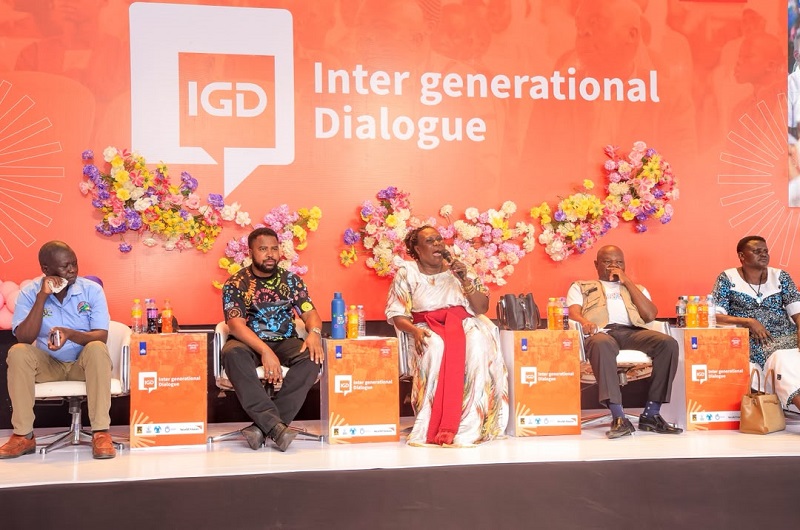
MP Obigah (C) flanked by Reach A Hand Africa CEO Humphrey Nabimanya (L) and other district leaders during the occasion at Leju Stadium on September 30, 2026
TEREGO – Terego District Woman Member of Parliament (MP) Rose Obigah has urged all stakeholders to take stronger measures to reduce cases of teenage pregnancies in Uganda.
She made the call during an annual intergenerational dialogue organized by the Protect SRHR consortium in Terego District on 30 September 2026.
Held at Legu Grounds, the event brought together thousands of young people, parents, community leaders, health workers, local government officials and other stakeholders.
The dialogue was aimed at strengthening community action against teenage pregnancies, child marriage and teenage motherhood by examining contributing factors and exploring community-led solutions.
While presiding over the event, Obigah called for firmer measures to protect adolescents from environments that increase the risk of sexual exploitation and early sexual activity.
She specifically recommended the temporary suspension of daytime discos and earlier closure of night markets in the district, linking both to heightened vulnerability among young people.
“I want to tell my people of West Nile, and the people of Terego in particular, what is going to stop teenage pregnancies, child mothers and child marriages in Terego. Number one on the list is: if we can do away with these local, useless discos,” she said.
Obigah noted that some young girls had reported becoming pregnant after attending dances, with sexual encounters occurring in nearby areas such as mango trees and cassava plantations.
“Nobody can have sex by the roadside during the day. No. And nobody in Terego has a standard disco that will regulate children and adults. We don’t have such a disco,” she said.
She added that local authorities had already issued a circular on the matter and pledged her support for its enforcement.
“And to all the discos, so-called discos in our communities, I am warning you: close them before you face the worst of your life. Because we need the girls. You cannot finish all the girls like this,” she said.
On night markets, Obigah questioned the practice of operating late into the night while children often accompany their parents.
“How can markets go up to almost 11 at night, 10 at night? And where will the children be?” she asked.
She called for night markets in the district to close by 6:30 pm, arguing that children should not be exposed to late-night environments.
“These two things, if we can stop them, then we do intensive public education,” she said.
The appeal comes amid ongoing concern over teenage pregnancy in Terego and the wider West Nile region.
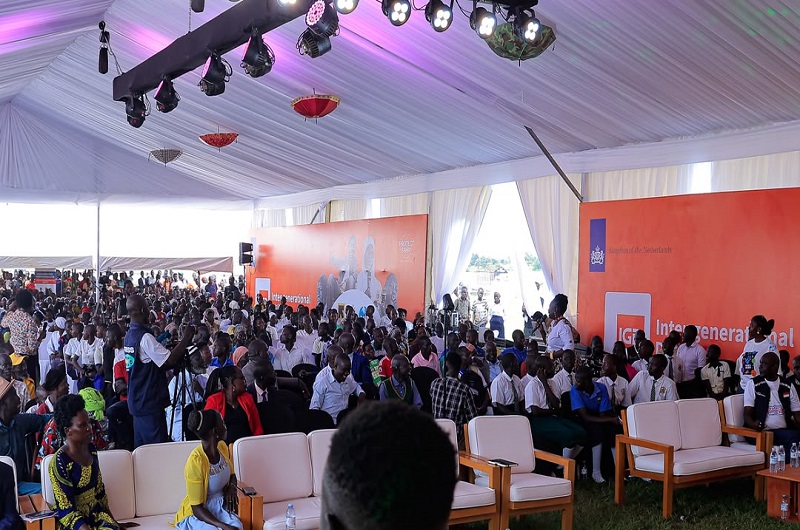
According to Terego District Health Management System data presented during the PROTECT SRHR performance review, the district’s teenage pregnancy rate declined from 21 percent to 20 percent between September and December 2025. The figures underscore the need for sustained interventions to address teenage pregnancies and related challenges, including child marriage and teenage motherhood.
At the regional level, the 2022 Uganda Demographic and Health Survey reported that 14.6 percent of women aged 15–19 in West Nile had had a live birth. This is a different measure from the Terego teenage pregnancy rate and should not be directly compared with the district’s 20 percent figure.
Obigah also called for stronger adolescent-friendly health services and directed the District Health Officer to establish youth-friendly corners in health facilities across the district.
“We are going to create youth-friendly corners in all the health centres. The DHO has to do this immediately,” she said.
She further emphasized the need for greater engagement with young people in schools and communities, stressing the importance of listening to adolescents and understanding the challenges they face.
“We are going to visit schools and make sure the children speak out. The parents will also speak out, and we will see how we can reach common ground,” she said.
“We are not going to sit with children and say, ‘How are you saying this?’ No. We want to listen to them.”
The dialogue was organized under the PROTECT SRHR project, a four-year program supported by the Embassy of the Kingdom of the Netherlands and implemented across six West Nile districts: Terego, Yumbe, Maracha, Koboko, Nebbi and Pakwach.
The project is implemented by a consortium comprising the International Rescue Committee (IRC), World Vision Uganda, Reach A Hand Africa, and Humanity & Inclusion, working closely with district local governments.
PROTECT SRHR seeks to improve access to and use of sexual and reproductive health and rights services, as well as sexual and gender-based violence services, among adolescents, young people, women of reproductive age and marginalized groups.
It also aims to reduce preventable maternal deaths, teenage pregnancies, sexual and gender-based violence, child marriage and new HIV infections among adolescents, particularly girls, while improving retention and completion rates for girls and boys in primary and secondary education.
Through community dialogues, health and education interventions, peer engagement and other approaches, the project brings together young people, parents, community leaders, health workers and local authorities to address the social and structural factors affecting adolescents’ sexual and reproductive health.
The Terego dialogue provided a platform for young people and adults to discuss the causes of teenage pregnancy and identify practical community responses. Organisers stressed that sustained collaboration among young people, parents, schools, health workers, local government, cultural and religious leaders and civil society organizations will be critical to reducing teenage pregnancies and improving the wellbeing of adolescents in Terego.