Yumbe girls break silence on GBV, child marriage and the fight to stay in school at the Brave Girls Festival
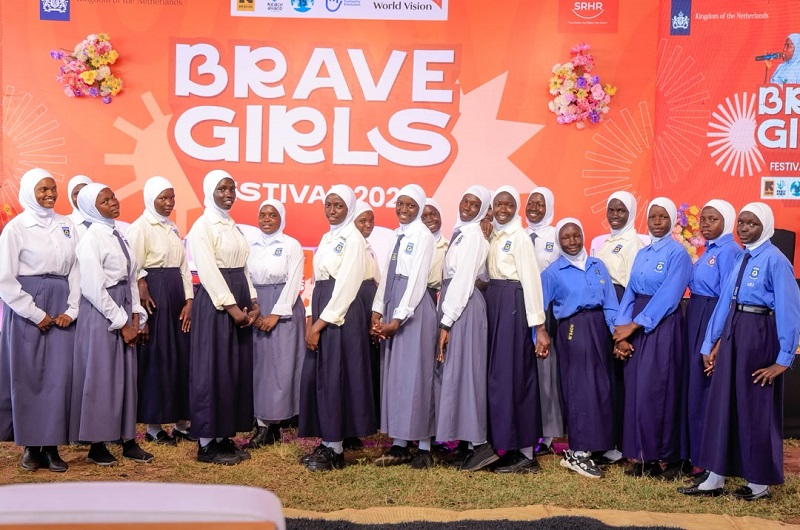
Students pose for a photo moment during the Brave Girls Festival in Yumbe on Monday
YUMBE — Sixteen-year-old Ayola Susan (not real name), a Primary Six pupil at Yumbe Primary School, has witnessed and experienced domestic violence at home.
Like many children in Yumbe District, Ayola grew up leading a relatively normal village life. That changed when her father began repeatedly beating her mother. The violence eventually led to the parents’ separation amid ongoing gender-based violence (GBV).
Fighting back tears, Ayola shared her ordeal with the audience at the Brave Girls Festival held at Boma Grounds in Yumbe District on Monday, September 28, 2026.
The event was organized by a consortium of organizations under the Protect SRHR Project including the International Rescue Committee, World Vision, Reach A Hand Africa and Humanity & Inclusion with support from the Embassy of the Kingdom of the Netherlands.
“I have experienced this before, when my father used to beat my mother. It reached a point where my father divorced my mother. Because of the things my father used to tell my mother, my mother refused to help us. She decided to go to Cuba and stay there when I was still young,” she said.
She continued: “My father also refused to help us. He decided to go away and leave us alone, suffering. He rented a house and stayed there with another woman.
“At that moment, we felt helpless, and I decided to drop out of school because there was no one paying my school fees. Whenever they sent us home because of school fees, I would go home and there would be no one there to help us.
“To get the things I needed, I decided to look for work. I got a job at a hotel washing utensils. They paid us UGX 2,000 per day.
“Later, one of my teachers, Richard, found me at the restaurant and asked me why I had dropped out of school. I told him everything that had happened. He decided to help me. He tried to call my father and talk to him, but he refused to help us.
“Up to now, my father has refused to help us, but Richard is still helping me.
“What hurts me more is that sometimes he can say, ‘I can pay your school fees,’ but he does not. When they send us home because of school fees, he will just say, ‘The money I have is for food. But for school fees, you have to go and look for it.’”
Ayola was among many girls who shared their experiences. Under the festival theme “Amplifying Girls’ Voices, Amplifying Girls’ Power and Potential,” participants gave testimonies on GBV, sexual violence and other challenges. It was an emotional moment.
Gender-based violence emerged as the major factor affecting their lives and a key driver of the challenges facing the girl child.
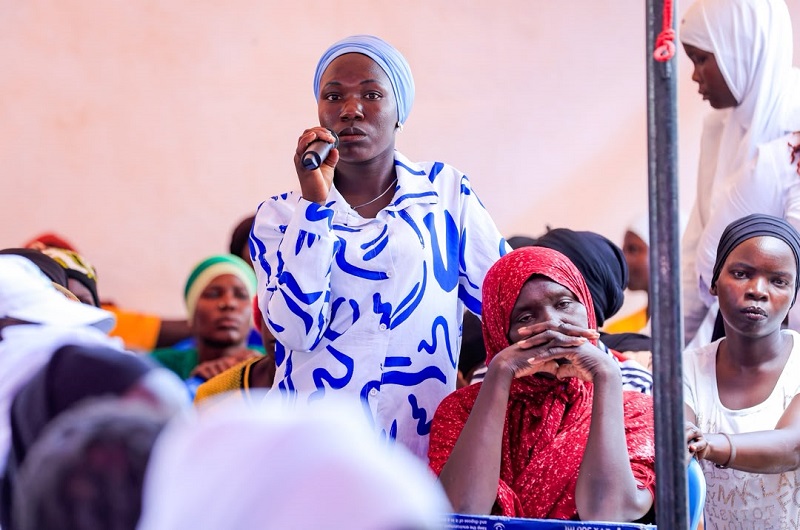
Modest Kinawa, the Protect SRHR Project Coordinator, explained that these issues arise at household, community and institutional levels, making multi-level responses essential.
“This is why we have such an initiative as Brave Girls, bringing together parents and cultural leaders, among others, so that young girls who speak out can help generate solutions at every level,” he said.
Abubakar Ijosiga Muzamul, Senior Assistant Chief Administrative Officer for Yumbe District, called for increased funding to strengthen awareness and sensitization on sexual and reproductive health issues.
“We have continued to lobby for funds to conduct awareness campaigns on GBV, especially in schools and among parents. Our funding allocation is over UGX 72 billion, of which over UGX 35 billion goes to salaries; the balance supports capital development and software activities, including awareness creation and sensitization of stakeholders on government programs such as PDM, Emyooga and the Youth Livelihood Program, which contribute to curbing GBV,” he said.
“As a district, over UGX 2 billion is needed to streamline awareness creation on these issues,” he added.
The chief guest, Hajjat Medina Naham Ojale, the Director of Finance and Administration of the NRM party, condemned child marriage and stressed the importance of keeping girls in school.
“The only way to manage child marriages is by keeping them in school. There is nothing as important as keeping girls in school. Let us join hands to support the education of the girl child,” she said.
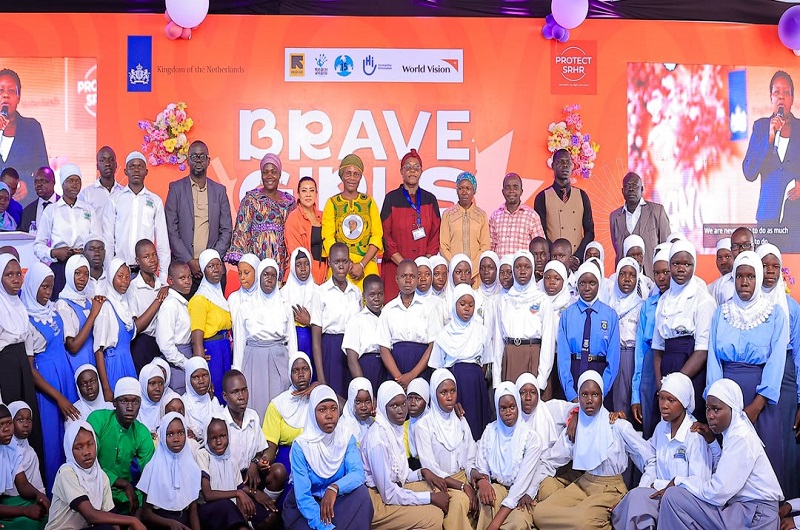
Representing the Assistant District Health Officer, Irene Maturu, a midwife at a Health Centre III in Yumbe, outlined key drivers of maternal deaths and early marriages in the district. These include delayed decisions to seek care, delayed referrals, transport challenges, inadequate birth preparedness, teenage pregnancy, non-institutional deliveries and related gaps.
She called for improved access to adolescent sexual and reproductive health services through expanded youth-friendly services, stronger safe learning environments that support comprehensive sexuality education in schools, and the reintegration of adolescent mothers into education, among other measures.
Yumbe is one of the districts in Uganda with high rates of teenage pregnancy. According to the district’s Health Management Information System (HMIS), numbers peaked significantly during the COVID-19 pandemic, exceeding 7,000 cases recorded over a short multi-month lockdown period. By the 2023/2024 financial year, the figure was estimated at 5,740 cases.
About PROTECT SRHR
Protect Sexual and Reproductive Health and Rights (PROTECT SRHR) is a four-year project running from 2024 to 2028, funded by the Embassy of the Kingdom of the Netherlands in Uganda. It is implemented by a consortium comprising the International Rescue Committee, Reach A Hand Africa, Humanity & Inclusion and World Vision Uganda as a strategic partner.
The project aims to improve sexual and reproductive health and social well-being among adolescents, young people and women in Uganda’s West Nile region, particularly in the six districts of Pakwach, Terego, Maracha, Yumbe and Koboko (and one additional district in the region).
It focuses on improving access to SRHR services, strengthening education systems, promoting economic empowerment, transforming negative social and gender norms, and strengthening inclusive governance.
PROTECT SRHR is implemented across six districts, 89 sub-counties, 167 health facilities and 952 schools, reaching an estimated population of 2,281,205 people, including approximately 688,240 refugees. Its target groups include adolescents and young people aged 10–24 (including young people with disabilities, teenage mothers and those not in education, employment or training), as well as women of reproductive age.
Through interventions in health, education, social-norms transformation, economic empowerment, innovative financing, and governance and accountability, the project seeks to address preventable maternal deaths, teenage pregnancies, sexual and gender-based violence, child marriage and new HIV infections, while strengthening the systems and community structures that support young people’s health and well-being.